Storm Center

The best way to prepare for a storm is to take action before a threat ever develops. Use the organized resources, definitions, and checklists below to protect your family, property, and health.
Click Here to Check the Status of Power in Your Neighborhood
Important Information & Terms to Know
Understanding the specific terminology used by weather and emergency officials can help you make informed, rapid decisions when a storm approaches.
Tropical Systems
- Tropical Disturbance: An area of showers and thunderstorms with no strong winds. These are highly common throughout the tropics.
- Tropical Depression: A clearly defined emerging low-pressure area with counterclockwise air rotation reaching speeds of 38 mph or less.
- Tropical Storm: A low-pressure system with wind speeds ranging from 39 to 73 mph. At this stage, the storm receives an official name.
- Hurricane: An intense low-pressure system featuring winds rotating counterclockwise around a central eye at speeds of 74 mph or greater.
Prepare For A Storm: Action Timeline
Follow this timeline to guarantee nothing is overlooked before, during, and after a storm hits.
Update Your Information
Phase 1: Long Before a Hurricane Threatens (Plan & Learn)

- Build an Emergency Plan: Fully develop a personal emergency plan for your household.
- Plan to Stay Connected: Sign up for free emergency alerts from your local government.
- Understand the types of alerts you may receive and have a plan to respond immediately when you receive them.
- Plan to monitor local weather and news closely.
- Have a backup battery, power bank, or alternative way to charge your cell phone.
- Keep a battery-powered radio ready to receive information during a power outage.
- Learn Emergency Skills: Take Red Cross First Aid and CPR classes so you are equipped to provide medical help to your family if necessary.
- Be ready to live without power: Utilities may be offline. Prepare your household to live without electricity, gas, and running water.
- Plan ahead for your specific electrical needs, including cell phones and essential medical equipment. Talk to your doctor well in advance to arrange safe backup power options.
- Know Your Zone: Learn your home's exact elevation above sea level, your designated evacuation zone, and your primary evacuation routes.
- Plan for Evacuation: Decide where you will go if you live in a mobile home or a mandatory evacuation zone.
- Review Insurance: Check your policies annually. Remember that standard homeowners' insurance does not cover flood damage. Know which documents you need to establish home ownership and file claims.
- Inventory Assets: Create a comprehensive written or visual inventory of all personal property.
- Property Maintenance: Trim or remove trees that pose a danger to your home. (Note: Fallen trees that do not damage structural property are generally not covered by insurance). Submit a free tree trimming request by visiting https://www.keysenergy.com/resources/customer-service-requests
- Protect Windows: Acquire proper window shutters. Windows are usually broken by flying debris rather than wind pressure alone; shutter your windows, do not tape them.
- Arrange Pet Care: Coordinate safekeeping arrangements for your pets by contacting the Humane Society for guidance. Pets are not permitted in standard emergency public shelters.
Phase 2: When a Hurricane Watch is Issued (Be Prepared!)
Before a Hurricane Threatens
- Stay Alert: Closely monitor storm updates and emergency reports on your local radio and broadcast stations. Remain calm.
- Inventory Supplies: Double-check your household emergency kits. Stock a one-week supply of non-perishable food and water, as store shelves empty quickly once a watch is active.
- Fuel & Cash: Fill your vehicles completely with gasoline. Withdraw an emergency
supply of cash, as ATMs will likely lose power and be unavailable during and after the storm. - Secure Watercraft: Anchor small boats securely or transport them to designated safe areas.
- Shelter Prep: Prepare your evacuation materials and review what to bring versus what to leave behind.
Phase 3: When a Hurricane Warning is Issued (Take Action!)
- Mobile Homes: Inspect your vehicle/structure tie-downs and leave immediately.
- Secure External Items: Bring indoors or securely anchor anything that could be swept away by wind (e.g., garbage cans, garden tools, lawn furniture, signs, awnings, toys). Loose items become deadly missiles in hurricane-force winds.
- Board Up: Securely fasten large windows with high-quality lumber and strong outside bracing. Makeshift boarding can cause more structural damage than no boarding at all.
- Trailer Boats: Fill trailer-mounted boats with water, lash them securely to the trailer, and use ground or house tie-downs to anchor the trailer frame.
- Flee Low-Lying Areas: Move away from beaches and coastal areas vulnerable to
high seas or storm surges. If your evacuation route crosses roads prone to flooding, leave early to avoid becoming marooned. - Pool Care: Lower your swimming pool's water level to accommodate heavy rainfall, and add extra chlorine to prevent bacterial contamination.
Phase 4: Are you staying home or evacuating?
Sheltering at Home Information
- Shelter Indoors: Stay inside and away from all windows, skylights, and glass doors. Keep yourself calm.
- Maintain Power & Info: Keep your television or radio continuously tuned to local broadcast stations for emergency alerts.
- Emergency Water: Sterilize your bathtubs and fill all available large containers with a full week's supply of clean water.
- Floodwater Danger: Do not walk, swim, or drive through floodwater under any circumstances. Remember, Turn Around! Don't Drown!
- The Storm Eye: If the center ("eye") of the hurricane passes directly over you, winds will temporarily drop to a lull lasting anywhere from a few minutes to over half an hour. Stay in a safe place. Only make critical emergency property repairs if absolutely necessary during this lull. Be prepared for the wind to return suddenly from the opposite direction with even greater force.
Evacuation Information
When a storm threatens, local and state officials analyze forecasts from the National Hurricane Center to issue orders. Evacuation orders may come from local officials and/or the Governor. Evacuation orders are mandatory—nobody saves a house by staying in it.
If you must evacuate:
- Turn off your main electrical switch, main water valve, and all gas valves before exiting your home.
- Take critical documents with you, focusing on insurance policies and home ownership records.
- Pack survival supplies, ideally using large, durable plastic garbage bags for transport.
- Pack essential personal medications and specialty household items.
- Bring warm, protective clothing.
- Be highly alert for tornadoes, which are frequently spawned by hurricanes.
- Do not bring pets, weapons, or alcoholic beverages to Red Cross shelters.
Monroe County Special Needs Registry
In accordance with Florida Statute 252.355, residential customers with physical, mental, cognitive, or sensory disabilities can access the Special Needs Registry. This system assists Monroe County Emergency Management staff in identifying and helping residents who require specialized care during sheltering and evacuations.
How to Register: Call (305) 292-4591 or sign up online at Monroe County Emergency Management. Registration must be completed by May 31st to ensure your needs are fully accounted for before hurricane season begins.
Steps to Take After the Hurricane
- Stay Safe
- Delay Re-entry: If you evacuated, do not return to your neighborhood until local authorities give formal authorization. Wait for officials to explicitly state that it is
safe before going back home. Stay completely out of disaster areas unless you are uniquely qualified to provide emergency assistance. - Avoid Downed Lines: Never touch loose, sagging, or dangling utility wires, lines, or poles. They can carry live currents and electrocute you.
- Avoid Floodwaters: Do not touch or wade through standing floodwaters. They may contain raw sewage, harmful bacteria, and toxic chemicals that can make you severely ill.
- Reduce Fire Risk: If the power is out, use flashlights or battery-powered lanterns instead of candles to minimize fire hazards in damaged structures.
- Prevent Carbon Monoxide Poisoning: Gasoline, propane, natural gas, or charcoal- burning devices (such as portable generators) should never be used inside a
home, basement, garage, tent, or camper—or even outside near an open window. Carbon monoxide cannot be seen or smelled, but it can kill you fast. If you start to feel sick, dizzy, or weak, get to fresh air right away—do not delay. - Travel Cautiously: Walk and drive with extreme care. Coastal roads can have sub-surface soil washed out from under the pavement, causing the road to collapse
unexpectedly under the weight of a vehicle.
- Delay Re-entry: If you evacuated, do not return to your neighborhood until local authorities give formal authorization. Wait for officials to explicitly state that it is
- Stay Healthy
- Food Safety: Guard closely against spoiled food caused by power outages. When in doubt, throw it out! Discard any food that got wet or remained warm.
- Medication Safety: Ask your healthcare provider or doctor about the safety and shelf-life of refrigerated medicines that lost power.
- Water Safety: Hurricanes and flooding can make drinking water unsafe by compromising local infrastructure. Do not consume or use tap water until authorities officially declare it safe. Continuously monitor your local health department for updates on drinking water safety.
- Cleanup Safely
- Wear Protective Gear: Always wear appropriate personal protective equipment, including heavy duty work gloves, safety goggles, and thick boots.
- Disinfect: Clean and thoroughly disinfect everything in your home that got wet or came into contact with moisture.
- Work in Teams: When handling or cleaning heavy storm debris, always work with a partner.
- Equipment Safety: Make sure you have proper training and experience before operating heavy equipment, such as chainsaws.
- Avoid Overexertion: Heart attacks are a leading cause of death after a hurricane. Cleaning up is a massive job; be deeply mindful of overworking. Take regular breaks, pace yourself, and take care of your physical body.
- Take Care of Yourself
- Acknowledge Your Feelings: It is completely normal to experience a lot of difficult feelings, high stress, or severe anxiety following a disaster.
- Healthy Habits: Eat healthy food and get enough sleep whenever possible to help your body naturally manage and process stress.
- Disaster Distress Helpline: If you need someone to talk to, you can contact the helpline for free, confidential support. Call or text 1-800-985-5990.
- Seek Support: Request necessary medical attention at active clinics. Call your local Red Cross if you have urgent, immediate needs for food, shelter, clothing, or crisis counseling.
- Assess Property Damage: Notify your insurance representatives of property damage, and thoroughly document all issues with photos or video. Make
immediate, temporary repairs to protect your home from further weather exposure or looting. Report broken water or sewer mains directly to the local water department.
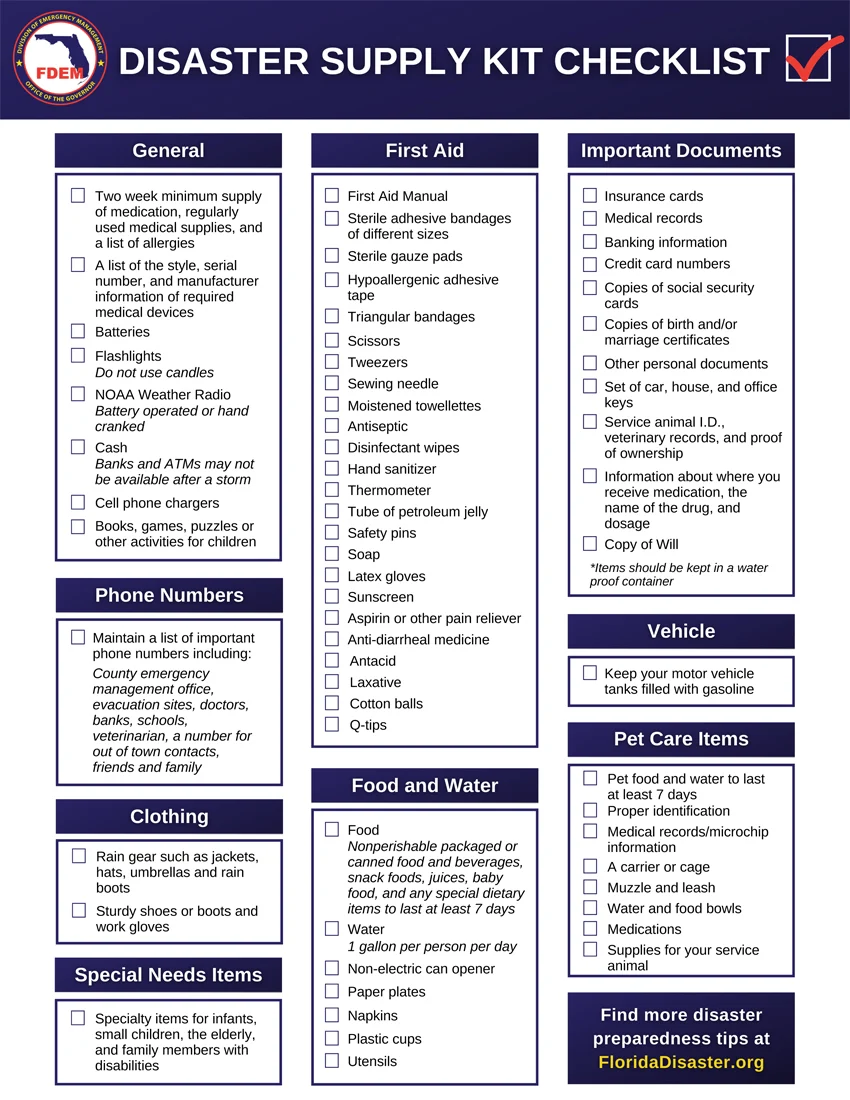
Disaster Supply Kit Checklist
Relief agencies will deploy to help, but you must be prepared to be entirely self- sufficient immediately following a strike. Below is the framework curated by FloridaDisaster.org to guide your preparation. Secure your items in water-proof containers where applicable.
Download the Disaster Supply Kit Checklist Below: